
Since the onset of Russia’s full-scale invasion in 2022, Poland has shown unparalleled and unconditional support for Ukraine. Despite historical tensions and current challenges—such as disputes over grain imports and complex issues like the Volhynia massacre—no other nation has provided such comprehensive assistance. This commitment was notably exemplified when Prime Minister Mateusz Morawiecki and Deputy Prime Minister Jarosław Kaczyński became the first foreign leaders to visit Kyiv amidst the war, demonstrating courage and solidarity at a time when many politicians from other countries hesitated, fearing the imminent fall of Ukraine.
In stark contrast, Polish Ambassador Bartosz Cichocki remained steadfast in his post, refusing to evacuate his embassy even under the threat of Russian bombardments, while numerous other embassies were closing down operations. This unwavering presence highlighted Poland’s dedication to supporting Ukraine during its most perilous moments.
Military Aid: A Lifeline for Ukrainian Defense
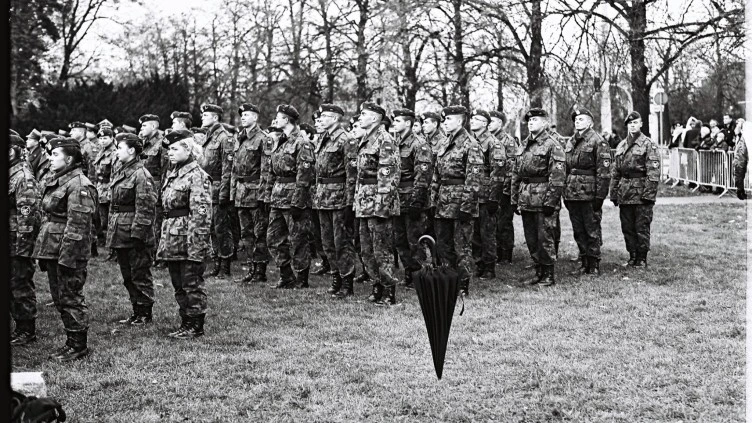
Poland has delivered an extraordinary array of military equipment to Ukraine. By 2024, it provided over 400 tanks, including T-72 and PT-91 models, along with 54 Krab self-propelled howitzers and infantry fighting vehicles. Additionally, Poland supplied combat aircrafts, including MiG-29s, significantly enhancing Ukraine’s air capabilities at a crucial time. Among the small arms provided were Grot carbines, of which several thousand were delivered, receiving excellent reviews from the battlefield, much like most Polish weaponry on the front lines, earning the trust of Ukrainian soldiers. These contributions were further reinforced by crucial anti-aircraft systems, such as Grom and Piorun MANPADS, as well as Langusta rocket launchers, Rak mortars, a fleet of FlyEye drones for reconnaissance, and others. On top of these physical supplies, Poland offered military training to Ukrainian forces, helping them adopt NATO-standard procedures and battlefield tactics.
The scale of Poland’s military aid, valued in the billions of dollars, is not fully disclosed, with many efforts conducted discreetly to protect both Ukraine’s security and Poland’s strategic objectives. It is widely believed that without Poland’s military backing, Ukraine might no longer exist as a free nation. In many ways, Ukraine has acted as a buffer, preventing Russian aggression from spilling into Poland, which Moscow would likely treat as part of its sphere of influence, reminiscent of its treatment of the “Vistula Land” (Kraj Priwislański) in the 19th century.
Humanitarian Support: Opening Hearts and Borders
Beyond military aid, Poland opened its borders in an unprecedented show of humanitarian solidarity. Over 6 million Ukrainian refugees have passed through Poland since the invasion began, and approximately 1.5 million have settled long-term. The Polish government introduced the PESEL identification system, granting refugees access to healthcare, education, and social benefits like the 500+ child support program. An estimated 180,000 Ukrainian children were integrated into Polish schools, demonstrating the open-hearted response of both the government and society.
Poland’s acceptance of these refugees—mostly women, children, and the elderly—whose loved ones are fighting on the frontlines, has been a gesture of pure compassion. This outpouring of support is a testament to Poland’s moral and cultural bond with Ukraine, recognizing that these individuals are not only seeking refuge but are part of the larger fight for Ukraine’s independence.
Diplomatic Leadership: Advocating for Ukraine on the Global Stage
Poland has also taken on a key diplomatic role, consistently advocating for tougher sanctions on Russia and pushing for more significant military and financial aid to Ukraine at forums such as the European Union, NATO, and the United Nations. Polish leaders have been vocal proponents of Ukraine’s EU and NATO membership, further securing the country’s future within Europe’s democratic framework.
A Shared Future: Hope or Regression?
The support Poland has given to Ukraine during its darkest hour is a powerful symbol of the potential future the two nations could build together. Despite historical wounds and recent tensions, this moment provides a unique opportunity. Poland and Ukraine, working together, could reshape the geopolitical landscape of Europe. By leveraging their cultural ties, shared military strength, and strategic economic potential, these nations could become pivotal players in controlling the flow of goods, ideas, and security between Europe and Asia.
However, the question remains: will Poland and Ukraine capitalize on this opportunity to build a lasting, mutually beneficial relationship, or will they fall into old patterns of discord, fueled by internal politics and external meddling? The choice is theirs to make. Together, the two nations have a historic chance to forge a future of cooperation, or they could succumb to divisions that have weakened them in the past—like the 17th-century conflicts between the Polish Commonwealth and the Cossacks, which contributed to both nations' downfall.
Poland and Ukraine, when united, have proven capable of resisting empires, whether it was the Ottoman Empire at Chocim and Vienna, or the Bolsheviks in 1920. Today, as they stand together against Russian aggression, they have the potential to once again shape the course of European history. The future is in their hands—will they build on this brotherhood, or will they allow it to slip away into the pages of forgotten history?
Author: Robert Łapacz